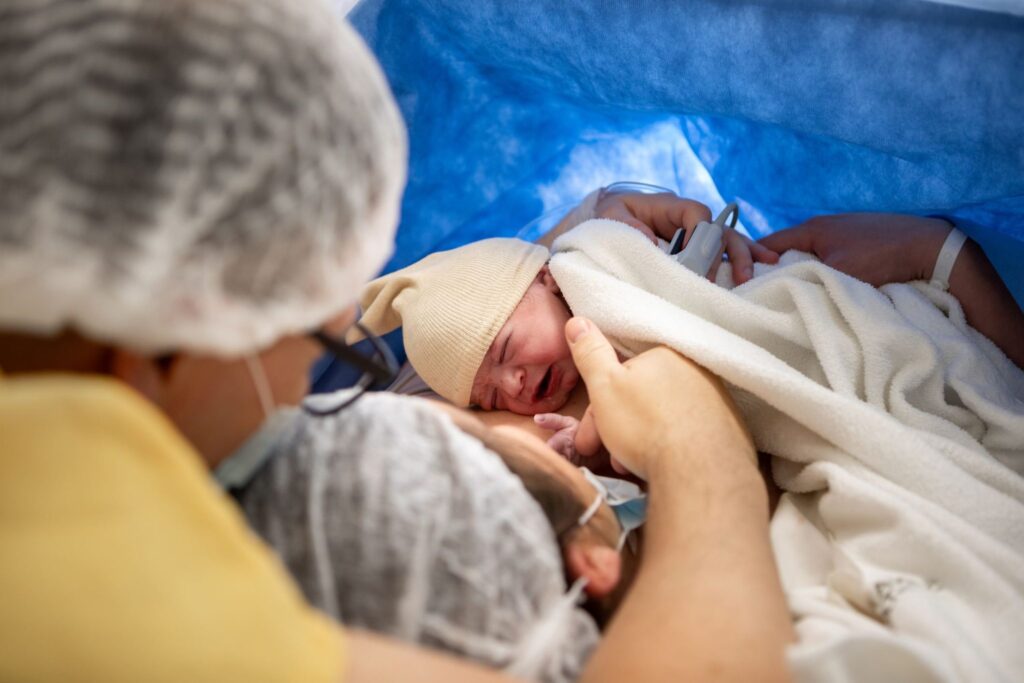
Birth Injury Lawsuits

 If your child suffered an injury before, during or shortly after birth — such as brain damage, nerve injury, or other serious condition — you may be able to file a birth injury lawsuit. These claims allege medical negligence during prenatal care, labor, delivery or neonatal care.
If you believe your child was harmed by medical error at birth, you may be entitled to compensation.

Quick Facts

Category

Detail

Lawsuit Status

Active — medical malpractice claims ongoing

Claim Type

Birth injury / birth trauma lawsuits

Defendant(s)

Hospitals, obstetricians, neonatologists, nursing staff (various)

Potential Compensation

Varies significantly — settlements may be hundreds of thousands to millions of dollars. 

Deadline to File

Strict filing deadlines (statute of limitations) apply — act quickly. 

What Are Birth Injury Lawsuits About?

Birth injury lawsuits focus on allegations that medical professionals and hospitals failed to provide appropriate care before, during, or just after a child’s birth, and as a result the child suffered a serious injury. 

 Examples of alleged failures include:

  • Lack of proper fetal monitoring or response to distress

  • Delayed or inappropriate C-section or delivery

  • Improper use of forceps or vacuum extraction resulting in nerve or brain injuries

Failure to diagnose or address complications such as oxygen deprivation or infection
When those failures lead to injured children — such as with cerebral palsy, brachial plexus injuries, or other lasting disabilities — the family may pursue a lawsuit for compensation and accountability.

Who Qualifies for This Lawsuit?

You may qualify to join a birth injury claim if:

  • Your child experienced a serious injury linked to birth (e.g., brain damage, brachial plexus injury, cerebral palsy, spinal cord damage) 


  • The injury was plausibly caused by care during pregnancy, labor, delivery or neonatal care that did not meet accepted medical standards

  • You have medical records documenting prenatal, delivery, neonatal care and the child’s diagnosis and treatment

  • You file within the applicable statute of limitations in your state — timing is critical.

  • You are represented by or willing to talk to a physician-reviewing attorney who can assess negligence and causation.

Injuries or Damages Reported

Birth injury lawsuits commonly involve serious harms such as:

  • Brain damage or hypoxic-ischemic encephalopathy (HIE) from oxygen deprivation during birth
  • Cerebral palsy or other lifelong motor disorders
  • Brachial plexus nerve damage (e.g., Erb’s Palsy) from delivery trauma
  • Spinal cord injuries or skeletal fractures sustained during delivery
  • Neonatal injuries resulting in lifelong medical care, therapies, adaptive equipment, special education, lost wages for caregivers.
  • Emotional, financial and relational impacts on the family due to disability, care needs and loss of opportunity
2000–2010

Birth injury malpractice cases become more commonly filed, especially in cases of cerebral palsy and delivery trauma.

2010s

Legal frameworks and expert medical testimony expand in the field of birth injury law, proving causation and negligence.

2020–2025

Medical-legal awareness increases; more attorneys specialise in birth injury claims. Research on costs and outcomes highlights larger potential claims (average payouts above half-a-million in many cases).

2026

Families continue to bring claims asserting hospitals and doctors failed to meet standard care; early settlement and verdict data guide expectations.

How to File a Claim

Filing a birth injury lawsuit is serious but straightforward when guided by experienced attorneys:

  1. Fill out the short form below to get started.

  2. A birth-injury law specialist will review your case and medical records.

  3. If you qualify, they’ll file a claim and guide you through case development (expert review, evidence gathering) and settlement or trial.

You pay nothing upfront. Most birth injury lawyers work on contingency — they are paid only if you receive compensation.


  •  Settlement amounts have risen due to increasing lifetime care costs. While minor injury cases may settle for $400,000 – $750,000, cases involving severe, lifelong conditions like Cerebral Palsy (CP) or Hypoxic-Ischemic Encephalopathy (HIE) now frequently settle between $2 million and $10 million+. Jury verdicts can go even higher. Class Action Winning connects you with top-tier firms capable of securing these life-changing amounts.

  • Yes, but it is often longer than you think. While standard malpractice deadlines are short (1–3 years), most states "toll" (pause) the statute of limitations for minors. This means you might be able to file until your child turns 8, 12, or even 18 years old. Do not assume it is too late—let a lawyer check your specific state's laws.

  • No. Birth injury litigation is expensive to fight, but you pay $0 out of pocket. The attorneys work on a "contingency fee" basis, meaning they advance all costs (hiring medical experts, gathering records) and only get paid a percentage if they win compensation for your child.

  • The most critical pieces of evidence are the Fetal Monitoring Strips (heart rate records during labor) and Neonatal ICU (NICU) records. These often show the exact moment oxygen was lost. Your lawyer will obtain these for you, along with prenatal and delivery notes.

  • Yes. Because diagnoses like Cerebral Palsy or developmental delays often aren't fully understood until a child starts school, the law frequently allows parents to file years after the birth. Eligibility depends on your state's specific "tolling" laws for minors.

  • It is rarely just one doctor. Lawsuits typically name the Obstetrician (OB-GYN), the Delivery Nurses (who monitor the baby's heart rate), and the Hospital itself. If the hospital failed to have a C-section team ready for an emergency, the institution is liable.

  • The most common qualifying injuries include:

    • Cerebral Palsy (CP): Often caused by oxygen deprivation.
    • HIE (Hypoxic-Ischemic Encephalopathy): Brain damage from lack of oxygen.
    • Erb’s Palsy / Brachial Plexus Injuries: Nerve damage from pulling on the baby's shoulder.
    • Seizures: Developing shortly after birth.
  • This is the #1 question. Hospitals often claim an injury was "unavoidable" or "genetic." However, a placental pathology exam and expert review of the monitoring strips can prove that the injury was actually caused by medical negligence (like failing to perform a C-section when the baby was in distress).

  • Frequently, yes. Many successful lawsuits focus on the "failure to rescue." If the fetal monitor showed signs of distress (like a dropping heart rate) and the medical team waited too long to order an emergency C-section, that delay is often the direct cause of brain damage.

  •  These cases are complex. A settlement can sometimes be reached in 18–24 months, but if the case goes to trial to fight for maximum compensation, it can take 3–4 years. However, once filed, your lawyer may be able to help you access other resources while the case is pending.

“When my daughter was diagnosed with cerebral palsy, I thought we were alone. Then Class Action Winning helped us connect with a birth-injury attorney who actually understood her condition and our legal options.”

Maria G.
California

 “Our son had a brachial-plexus injury during delivery and no one warned us of our legal rights. This site laid everything out in simple language and I felt empowered to act for him.”

David R.
Texas

 “The idea of suing the hospital felt overwhelming. The birth injury page at Class Action Winning gave us clarity, and we didn’t feel pressured — just supported.”

Priya S.
Illinois

 “We thought the pain and extra care for our child were just our burden to carry. Then we learned about possible compensation and advocacy thanks to Class Action Winning.”

Michael J.
Florida
3276